
Introduction
Capturing customer attention is harder than it has ever been. Consumers today are exposed to thousands of messages every day across screens, social media, email, and physical environments. By the time a customer walks into your store, restaurant, or waiting room, their attention is already fragmented and competed for by dozens of other sources.
This is precisely why businesses are turning to digital signage as a core part of their customer communication strategy. A well-designed digital display does something that printed materials and verbal communication cannot do as consistently: it stops people and makes them look.
Why Customer Attention Is the Starting Point for Everything
Before a customer can be informed, engaged, or influenced, they need to notice the message in front of them. Promotions that customers never see are promotions that do not work. Information that fails to register has no value.
The entire purpose of using customer engagement displays is to bridge the gap between content that exists and content that actually reaches the audience it is designed for.
Why Digital Screens Command More Attention Than Static Displays
Movement Triggers Natural Attention
The human brain is wired to notice movement. This is an evolutionary response that helped our ancestors identify threats and opportunities in their environment. In a modern commercial setting, this same instinct means that a screen showing moving images or animation will attract significantly more attention than a static poster showing the same information.
Research in retail environments has found that digital screens receive substantially more dwell time from customers than equivalent printed displays in the same location.
Brightness and Contrast Stand Out
A well-calibrated digital screen produces a level of brightness and visual clarity that printed materials cannot match in typical indoor lighting conditions. The contrast between a bright, well-designed screen and the surrounding environment naturally draws the eye.
This effect is particularly strong in environments where the background is neutral, such as a white-painted retail wall or a standard office corridor, making digital signage especially effective in those settings.
Fresh Content Avoids Poster Blindness
One of the significant limitations of printed displays is what marketers call poster blindness. Customers who see the same poster in the same place visit after visit simply stop noticing it. Their brains filter it out as familiar, non-essential background information.
Customer engagement displays that rotate content, refresh their message regularly, or display time-sensitive information avoid this problem entirely. Because the screen is never showing exactly the same thing as the last visit, the brain continues to register it as new and worth a look.
Practical Strategies for Using Digital Signage to Maximise Customer Attention
Position Screens at Natural Decision Points
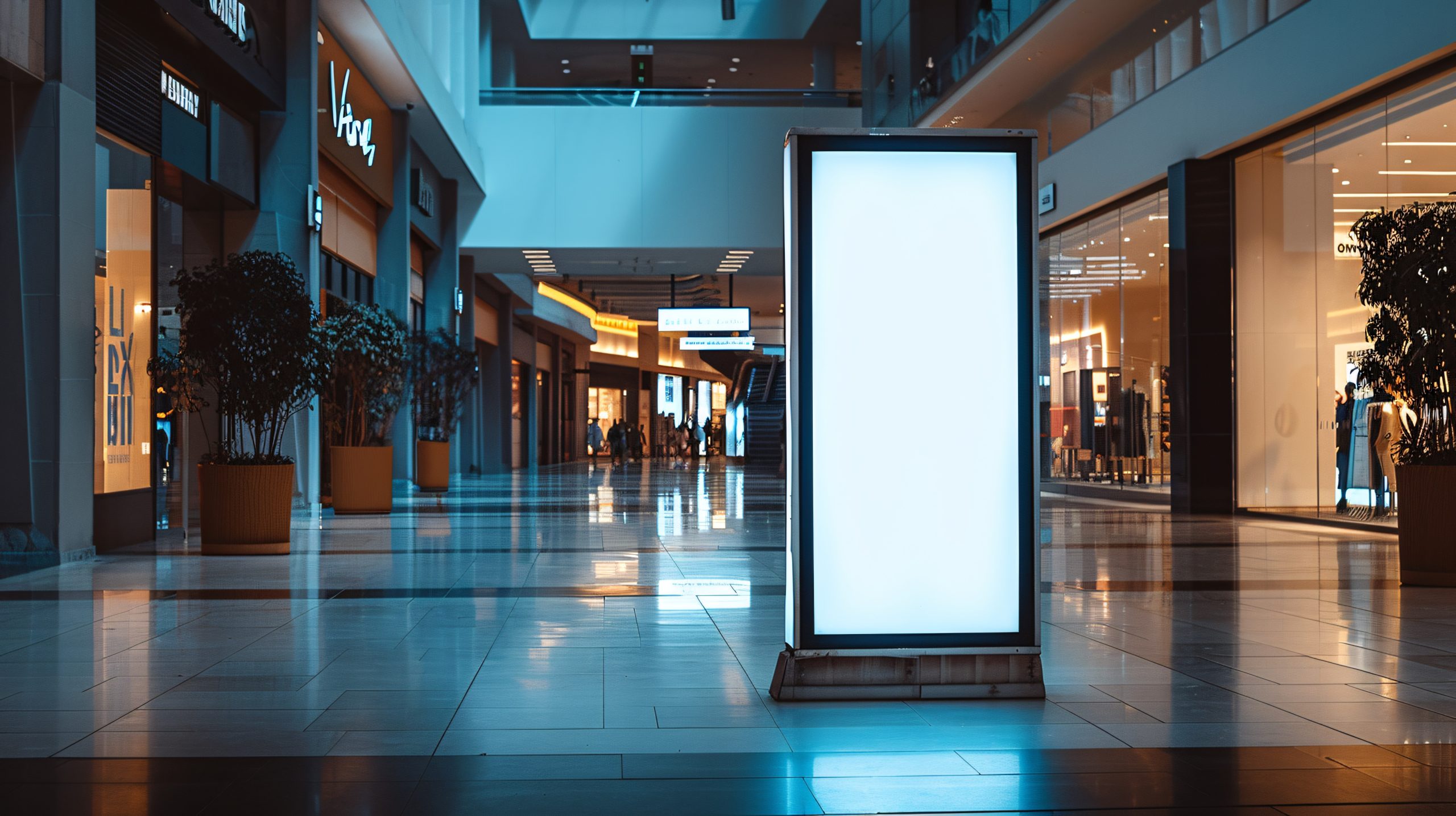
The physical placement of retail displays has a direct impact on how much customer attention they receive. Screens positioned at natural decision points, such as the moment a customer enters a space, at product selection zones, near the till, or at queue waiting areas, are seen by the maximum number of people at the moment when they are most open to receiving a message.
A customer standing in a queue is stationary and temporarily without a task. A well-designed screen in that location will receive extended attention simply because the customer has nothing else demanding their focus.
Use Short, Clear Messages
The average viewing time for a piece of digital signage content is between three and eight seconds. This means that any content displayed on a customer-facing screen needs to communicate its key message within that window. Long text paragraphs, complicated visuals, and busy layouts all reduce the effectiveness of a display.
The most attention-grabbing digital signage content follows a simple formula: one clear message, a compelling image or animation, and a single call to action. Less is consistently more in this medium.
Match Content to the Moment
Content that is relevant to the customer at the specific time and place they are seeing it attracts far more attention than generic messages. A coffee shop showing a lunchtime meal deal at noon is more compelling than showing the same promotion at 9am. A gym displaying a new class timetable on a Monday morning is more relevant than promoting it on a Saturday afternoon.
Scheduling features in digital signage software make this kind of time-targeted content straightforward to implement, and the improvement in customer response is significant.
Use Video and Animation Thoughtfully
Video content on digital screens can be highly effective at holding customer attention, but only when it is well produced and appropriate for the environment. A short, looping animation on a product display is ideal. A lengthy promotional video with a voiceover in a quiet waiting room may be disruptive rather than engaging.
The key is to match the format and energy level of your content to the environment it is displayed in and the state of mind of the customers who will see it.
The Compounding Effect of Consistent Attention
When customers repeatedly notice and register the messages on your digital screens, the cumulative effect builds over time. Brand recall improves. Promotional offers are more likely to influence purchasing decisions. Customers who have seen a product or service highlighted on a screen multiple times are more likely to ask about it or buy it when they reach the point of sale.
This compounding effect means that the value of good digital signage grows over time, making it one of the more rewarding long-term investments in customer communication.
Getting Started
MRG Systems has decades of experience helping businesses design and implement digital signage strategies that genuinely capture customer attention. From selecting the right screen sizes and placements to advising on content strategy, the team can support every stage of the process.
Contact MRG Systems to discuss how digital signage could improve customer engagement in your specific business environment.
Frequently Asked Questions
Why do digital screens attract more attention than printed posters?
The human brain naturally responds to movement and brightness, making dynamic screens significantly more noticeable than static printed materials in the same environment.
How long do customers typically look at a digital signage display?
Most customers engage with digital signage content for between three and eight seconds, so messages should be clear and direct with a single call to action.
What is poster blindness and how does digital signage avoid it?
Poster blindness occurs when customers stop noticing familiar static displays. Regularly updated digital content prevents this by always presenting something new.
Where should digital screens be positioned in a retail environment?
Entry points, product selection areas, queue zones, and near the point of sale are the most effective locations for capturing and holding customer attention.
Does video content on digital signage perform better than static images?
Well-produced short video and animation typically outperform static images for attention, but the format should always match the environment and the audience.