
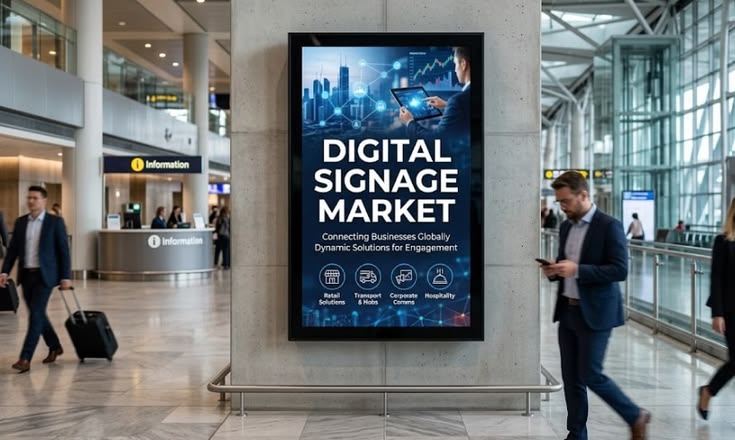
Good communication sounds simple. In practice, for most organisations, it’s one of the most persistent operational challenges they face. How do you get the right message to the right people at the right moment when your workforce is spread across different floors, different roles, and different sites? How do you keep customers informed without the delay and cost that printed materials involve?
Digital signage systems have become one of the most practical answers to both questions. This article looks at exactly how they improve communication for customers and for the people inside your organisation.
Why Traditional Methods Fall Short
Before getting into what digital signage brings to the table, it’s worth being honest about why the old methods struggle.
Printed materials are fixed. Once they’re produced and installed, changing the message means starting the process from scratch brief the designer, approve the artwork, wait for print, ship, install. In businesses where conditions change week to week or even day to day, that lag creates real problems. Outdated promotions stay on the wall. Incorrect pricing gets displayed. Expired offers mislead customers.
Email and intranet updates work well for office-based staff with constant screen access. But for the people working on shop floors, in warehouses, in kitchens, or in patient-facing roles they’re largely ineffective. Important updates get missed. The people who most need timely information are often the hardest to reach. Digital signage systems address both of these gaps at the same time.
How Digital Signage Improves Customer-Facing Communication
Accuracy That Builds Trust
The most immediate benefit for customer communication is the ability to display information that is always current. A retailer can show live stock availability. A restaurant can remove a sold-out dish in real time. A bank can display exchange rates that update automatically throughout the day.
That consistency and accuracy matters to customers more than most businesses realise. People who get correct information every time they visit are more likely to trust the business, return more often, and make more confident purchasing decisions.
Promotions That Hit at the Right Moment
One of the most commercially useful features of corporate signage platforms is content scheduling. You can programme a breakfast deal to appear from 7am and switch it off automatically at 11am. You can schedule a happy hour promotion to go live at 5pm without anyone having to touch a screen. You can run a weekend special from Friday afternoon and have it disappear on Sunday evening.
This means customers always see relevant offers not a generic message that bears no relation to what’s actually available right now.
Wayfinding That Actually Works
For hospitals, shopping centres, universities, and large corporate campuses, guiding visitors through the space is a constant challenge. Internal communication displays at key decision points entrances, lift lobbies, corridor junctions can show directional maps, department directories, and event schedules in a format that’s easy to read and instantly updatable.
When an event moves rooms or a department changes location, the wayfinding screens update centrally in minutes. Reception staff spend less time giving directions. Visitors have a better experience.
How Digital Signage Improves Internal Business Communication
Reaching Staff Who Aren’t at a Desk
A very significant proportion of the UK workforce spends their entire working day without sitting at a computer. Retail assistants. Warehouse operatives. Kitchen staff. Healthcare workers. Factory-floor employees. These are often the people who most need clear, timely communication and they’re the hardest to reach through conventional digital channels.
Business communication screens placed in staff rooms, break areas, production floors, and changing rooms ensure that operational updates, safety notices, performance data, and company news reach everyone. Not just the people who happen to check their inbox.
Real-Time Performance Data, Visible to Everyone
Many organisations use digital signage to display live performance metrics in a way that creates natural accountability and motivation. A contact centre showing live call answer times and queue lengths. A manufacturing facility tracking production output against daily targets. A retail store displaying hourly sales figures. When teams can see the data, they respond to it.
Safety Information That Stays Visible
In environments where health and safety compliance is critical, digital displays provide a reliable channel that doesn’t fade, get buried under other notices, or become outdated without anyone noticing. PPE requirements, emergency procedures, incident alerts, and hygiene reminders can all be displayed prominently and updated instantly when procedures change.
The Power of Centralised Control
What ties all of this together is the ability to manage every screen from one place. A marketing team at head office can push a new campaign to every branch simultaneously. A facilities manager can update evacuation procedures across every site in minutes. A communications team can share a company-wide announcement without routing it through individual managers and hoping it cascades correctly.
For multi-site businesses, this single point of control is often cited as the most valuable operational benefit of the whole system.
Integration With Your Existing Systems
Modern digital signage platforms increasingly connect to other business tools inventory systems, HR platforms, social media accounts, weather feeds, event management software. Content updates itself based on what’s actually happening in the business, rather than requiring someone to manually refresh it. That automation removes a category of administrative work entirely.
MRG Systems has been helping businesses design and implement digital signage strategies that genuinely solve communication problems since 1983. Whether you’re managing one site or many, the team can help you build a system that works for your specific environment. Get in touch to discuss your requirements.
Frequently Asked Questions
Can digital signage be used for internal staff communication?
Yes and it’s one of the most effective applications. Screens in staff areas, break rooms, and production floors reach employees who aren’t desk-based, with updates on operations, safety, and performance.
How does digital signage help with brand consistency across multiple locations?
A centralised management platform lets every screen across every site display the same approved content, updated simultaneously from one dashboard. No branch is ever showing outdated or off-brand material.
Is it possible to display real-time data on digital signage?
Yes. Modern platforms connect to live data sources including inventory systems, social media feeds, scheduling tools, and custom APIs, so content reflects what’s actually happening right now.
What types of businesses benefit most from digital signage communication systems?
Retail, healthcare, hospitality, manufacturing, and corporate environments all see strong results. Essentially any business with a distributed workforce or a need to communicate with customers at multiple touchpoints.
Can digital signage reduce the cost of printed communication materials?
Yes. Businesses that regularly update printed materials typically see substantial savings within the first year of switching to a digital signage system.